History
The history of Barquisimeto, Cabudare and Lara
From the Nueva Segovia of 1552 to Cabudare's 1818 act, the people who shaped Lara and where ¡naguará! comes from. With every fact linked to its source.
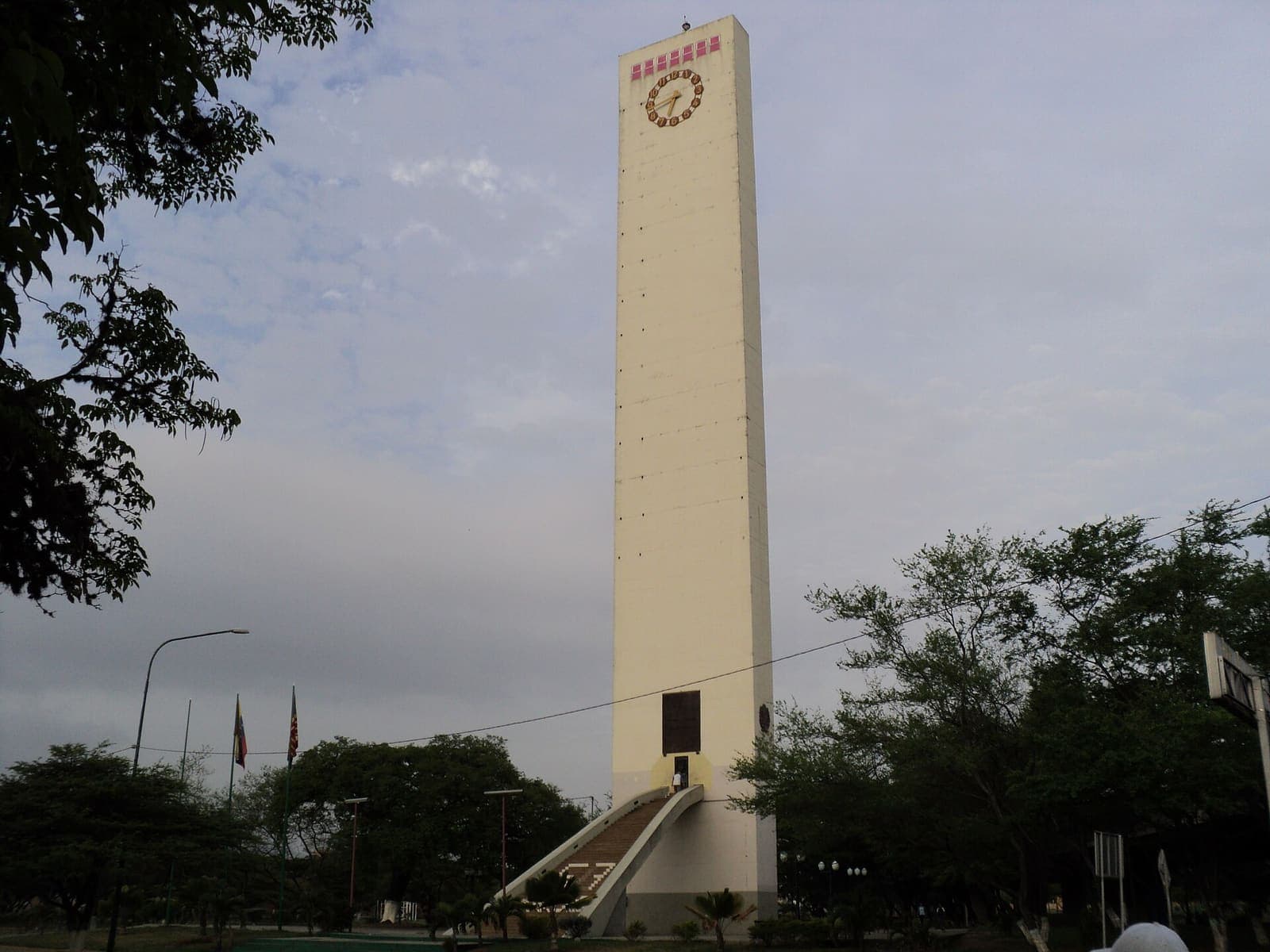
Barquisimeto
The story
Nueva Segovia, 1552. Acting governor Juan de Villegas founded the city in 1552 under the name Nueva Segovia. The first settlement stood near the Buría River, drawn by gold; the city moved several times before settling, around 1563, on the plateau north of the Turbio River. September 14 is celebrated as its founding date.[1][2]
The name. According to the tradition drawn from chronicler Nicolás Federmann, “Barquisimeto” would come from the Caquetío word Variquecemeto, “ash-colored river,” after the Turbio.[1][6]
Raids, earthquakes and the railroad. In 1561 Lope de Aguirre attacked the city; the attack failed when his men accepted a royal pardon. The earthquake of March 26, 1812, a Holy Thursday, left it badly damaged and buried a unit of the republican army in its barracks; afterwards the war of independence and the civil wars of the nineteenth century took their toll. Late in that century came the aqueduct (1890) and the Bolívar Railway (1891), which linked it to the port of Tucacas, where copper from the Aroa mines was shipped out. Its location made it a transport and trade hub between central and western Venezuela, and in the sixties it gained industrial weight.[1][2][3][4]
Musical capital. It is called Venezuela's musical capital for its tradition, for the Conservatorio Vicente Emilio Sojo (1936) and for musicians born here such as tenor Aquiles Machado and conductor Gustavo Dudamel. It is also called the Ciudad Crepuscular (Twilight City). Its people are barquisimetanos or, informally, guaros.[1][2][8]
Timeline
1552
Founding
Juan de Villegas, coming from El Tocuyo, founds Nueva Segovia de Buría, near the Buría River.[1][2]
1556
First move
The city moves to El Carabalí and is renamed Nueva Segovia de Barquisimeto.[1]
1561
Lope de Aguirre
The rebel conquistador attacks the city and fails when his men accept a royal pardon. Barquisimeto is rebuilt where the Turbio and Claro rivers meet.[1][2]
1563
A permanent site
The city settles on the plateau north of the Turbio River, where it stands today.[1]
1812
The Holy Thursday earthquake
The quake of March 26 badly damages the city in the middle of the war of independence.[2][4]
1832
Province of Barquisimeto
After Gran Colombia breaks up, the province of Barquisimeto is created, with the cantons of Barquisimeto, Quíbor, El Tocuyo and Carora, among others.[5]
1856
The first procession
Father José Macario Yépez calls a prayer procession with the Divina Pastora against cholera: the origin of the procession held every January 14.[7]
1881
The name Lara
The territory is named Lara for the first time, after General Jacinto Lara of Carora. After several changes, today's Lara state is settled in 1901.[5]
1890
Aqueduct
The city opens its aqueduct.[1]
1891
The train arrives
On January 18 the 87-kilometer El Hacha–Barquisimeto section of the Bolívar Railway opens, connecting the city to the port of Tucacas.[3]
1936
The Conservatory
The music school that now bears the name of Vicente Emilio Sojo is founded.[8]
1952
Quadricentennial
For the city's 400th anniversary the Obelisco opens, a 70-meter tower with a clock and a lookout.[2][9]
1968
University
The Universidad Centroccidental Lisandro Alvarado attains university status.[2]
Cabudare
The story
A town no one founded. Cabudare was not born of a Spanish founding act. It was a “sitio” (a settlement): haciendas and hamlets that gradually came together in the Turbio valley. Palavecino's official chronicler, Yolanda Aris, puts it bluntly: Cabudare has no founding date as such.[10][11]
Three waves of settlement. Chronicler Taylor Rodríguez identified three stages: the Indigenous one, with the Caquetío people in the valley and the Ajagua in the Terepaima range; the one that followed the founding of Nueva Segovia in 1552, when land grants created cattle ranches and haciendas; and the one tied to the pastoral visit of Bishop Mariano Martí.[10][11]
The 1818 act. In 1779 Martí recorded the existence of the “sitio de Cabudare,” and in 1785 he ordered a parish created there, an order that was not carried out because neighboring priests opposed it. On January 27, 1818, a church and civil commission drew up the act that set the new parish's boundaries and the land for its church. That act is the basis of Día de Cabudare (Cabudare Day); in 2026 the town marked its 208th anniversary.[10][11][12]
From parish to canton. Cabudare became a civil parish in 1821. From May 1, 1844, there was a Cantón Cabudare, with Cabudare, Sarare, El Altar and Buría: the direct forerunner of today's municipality. The district was named Palavicini in 1936 and Palavecino in 1945, after Cristóbal Palavecino, an independence hero born here who joined Bolívar in 1813.[12][13]
The Bolívar myth. For decades it was repeated that Simón Bolívar “founded” Cabudare on November 10, 1813. Chroniclers Taylor Rodríguez and Yolanda Aris maintain that no document supports that decree: Bolívar had no authority to create parishes. What is documented is that he camped in Cabudare, under the jabillo (sandbox tree) that now appears on the municipal symbols.[11][13][14]
From haciendas to city. It was a land of sugarcane, cacao and cattle. Lara's first sugarcane mill, or trapiche, ran in Tarabana (1920) and was replaced in 1956 by the Central Azucarero Río Turbio. Between the '70s and the '90s housing developments multiplied and Cabudare came to be seen as a bedroom community for Barquisimeto, although its commercial calling goes back to its origins.[10][15]
Timeline
1779
The “sitio de Cabudare”
On his pastoral visit, Bishop Mariano Martí records the hamlet.[10][11]
1785
A parish that does not come
Martí orders the parish created; opposition from neighboring priests stops it.[10][11]
1813
Bolívar camps under the jabillo
Bolívar's stay is documented; the “founding” decree attributed to him is not.[13][14]
1818
The boundary act
On January 27 the parish boundaries and the church land are set. It is Cabudare Day.[10][11][12]
1821
Civil parish
Cabudare becomes a civil parish as well as a church one.[12][13]
1834
The church of San Juan Bautista
The mother church is completed, on land donated by resident Antonio Tocoronte.[10][11]
1844
Cantón Cabudare
From May 1, Cabudare, Sarare, El Altar and Buría form a canton: the seed of the municipality.[12][13]
1920
The Tarabana mill
Lara's first sugarcane mill starts grinding; in 1956 the Central Azucarero Río Turbio replaces it.[10][15]
1936 and 1945
Palavecino
The district takes the name Palavicini and then Palavecino, after Cristóbal Palavecino, the independence hero from Cabudare.[13]
People
People from Lara, and one Andean who belongs to the whole country, who matter in the history of Lara and Venezuela. In order of birth.
Jacinto Lara
Independence general. He fought in the Campaña Admirable of 1813 and followed Bolívar all the way to Peru: at the battle of Ayacucho, in 1824, he commanded the reserve division of Sucre's army and came out of it promoted to major general. Back in Venezuela he governed the province of Barquisimeto between 1843 and 1847. His remains have rested in the National Pantheon since 1911.[5][16][17]
Connection: The state bears his name, as does Barquisimeto's airport.
Pedro León Torres
He joined the republican cause in 1810, was captured in 1812 and sent to Puerto Rico. From 1813 he fought alongside Bolívar in Venezuela and New Granada, and in 1817 he was promoted to brigadier general after the battle of San Félix. At Bomboná, on April 7, 1822, he led the frontal attack on the royalist position and was wounded; he died months later.[18][19]
Connection: The Torres municipality, whose seat is Carora and which is Lara's largest, is named after him.
Lisandro Alvarado
Physician, naturalist, historian, ethnologist and linguist. He traveled almost the whole country by donkey, canoe and on foot, noting landscapes, customs and the way people spoke, Indigenous languages included. Those notebooks became the Glosario de voces indígenas de Venezuela (1921) and the Glosario del bajo español en Venezuela (1929), pioneering studies of Venezuelan speech. He translated Lucretius's De rerum natura and belonged to the academies of Medicine, Language and History.[2][20]
Connection: Barquisimeto's Universidad Centroccidental is named after him.
José Gregorio Hernández
A physician who graduated from the Universidad Central de Venezuela in 1888. He studied histology, physiology and bacteriology in Paris and, back home in 1891, founded the country's first chair of Bacteriology: he is considered one of the pioneers of modern medicine in Venezuela. He was called the doctor of the poor for his devotion to patients without means. He died after being struck by a car in Caracas. He was beatified on April 30, 2021, and Pope Leo XIV canonized him on October 19, 2025, in St. Peter's Square, together with Mother Carmen Rendiles: they are the first Venezuelan saints.[21][22][23]
Connection: He was not from Lara but from the Andes, yet popular devotion to him has spread across Venezuela since his death.
Pío Alvarado
A cuatro player and singer of golpe larense, a countryman from Curarigua. The first Lara Folk Festival, in 1965, made him known nationwide. In 1967 he founded the group that, on his death in 1983, took the name Los Golperos de Don Pío. He left more than 100 recorded golpes, an archive of Lara's traditional song.[24][25]
Connection: His group remains a benchmark of golpe larense.
Francisco Tamayo
Botanist, naturalist, conservationist, folklorist and lexicographer. A student of Henri Pittier, he taught at the Instituto Pedagógico and the Universidad Central between 1947 and 1978 and explored the flora of half the country: several plants he discovered bear his name. He co-founded the Estación Biológica de los Llanos in Calabozo, preached the conservation of forests and water, and studied the folklore and vocabulary of Lara.[26][27]
Connection: The Anthropological Museum of Quíbor bears his name.
Alirio Díaz
Classical guitarist. He studied in Caracas with Raúl Borges and in Siena with Andrés Segovia, at the Accademia Chigiana, where he became his assistant. He built an international career from Italy and spent much of his travels collecting Venezuelan folk songs, which he arranged for guitar and played for audiences around the world.[28]
Connection: A statue of him greets everyone who enters Carora, his hometown.
How we talk
Words and expressions with the meanings given by the Spanish language academies' dictionaries. The examples are our own; words and examples stay in Venezuelan Spanish.
Lara's word
¡Naguará!
What it means. ¡Naguará! is the exclamation people from Lara use to express surprise or admiration, at good things and bad: it serves, says a page from the Universidad Centroccidental Lisandro Alvarado, “to lend a certain majesty to the thrill of the moment.” It belongs to the guaro speech of Lara, also heard in parts of Yaracuy and Portuguesa, and the Lara press counts it among the state's anthems of belonging.[6][29][31]
Where it comes from. No one knows for sure: its origin is uncertain, and the theories in circulation revolve around its relative, the demonym guaro. The most popular says guaro comes from a local bird like a parrot, small and noisy, that is now extinct. Another runs the other way: the demonym would have grown out of the exclamation itself, “¡na' guará!” Others derive it from guaral, a kind of rope, or from El Tocuyo traders who traveled to New Granada. None has solid documentary support.[6][29][30]
How to spell it. Naguará, na' guará or naguara: the Diccionario de americanismos of the Spanish language academies does not include it, so there is no fixed spelling.[6][29][32]
Lara speech
- guaro, guara
- Someone from Lara. It is an affectionate way to recognize a fellow native of Lara, and the name the state calls itself by.[6][29]
- Example: ¡Epa, guaro! ¿Cuándo llegaste de Barquisimeto?
- In English: Hey, guaro! When did you get in from Barquisimeto?
- ¡ah mundo!
- Expresses longing for one's homeland, as in “¡ah mundo Barquisimeto!”[6][33]
- Example: ¡Ah mundo Barquisimeto, cómo te extraño!
- In English: Oh, Barquisimeto, how I miss you!
- ¡vasié!
- Says that you disagree.[6][30]
- Example: ¿Que el autobús pasa puntual? ¡Vasié, eso no es así!
- In English: The bus comes on time? Come on, that's not true!
- ¡yavá!
- Lets people know you are leaving right away.[6]
- Example: —¿Vienes o no? —¡Yavá!
- In English: “Are you coming or not?” “On my way!”
- echón, echona
- Show-off, boastful.[6][34]
- Example: No seas echón, que el carro es prestado.
- In English: Don't show off, the car is borrowed.
- cachicamo trabaja pa' lapa
- “The armadillo works for the paca”: said of someone who works so that another reaps the benefit.[6]
- Example: Yo sembré y él vendió la cosecha: cachicamo trabaja pa' lapa.
- In English: I planted and he sold the harvest: the armadillo works for the paca.
All over Venezuela
- chamo, chama
- Child or teenager. Among young people, also friend or buddy.[35][36]
- Example: Los chamos salieron a jugar pelota en la calle.
- In English: The kids went out to play ball in the street.
- pana
- Close friend, inseparable companion.[37][38]
- Example: Él es mi pana desde el liceo.
- In English: He's been my buddy since high school.
- chévere
- Great, really good. Of a person, nice and friendly.[39]
- Example: La feria de septiembre estuvo chévere.
- In English: The September fair was great.
- ¡épale!
- Informal greeting. It can also warn of danger.[40]
- Example: ¡Épale! ¿Qué más, cómo está la familia?
- In English: Hey there! What's up, how's the family?
- catire, catira
- A fair-skinned, blond person.[41]
- Example: La catira de la esquina vende los mejores tequeños.
- In English: The blond woman on the corner sells the best tequeños.
- burda
- A lot, in large amounts. “Burda de” means a lot of something.[42]
- Example: Hoy hace burda de calor en el centro.
- In English: It's really hot downtown today.
- ladilla
- A person or thing that annoys you; also boredom, sluggishness.[43]
- Example: ¡Qué ladilla esta cola para echar gasolina!
- In English: What a drag, this line for gas!
- jeva
- Young woman.[44]
- Example: Una jeva estaba preguntando por ti en la panadería.
- In English: A girl was asking for you at the bakery.
- pavoso, pavosa
- A person or thing that brings bad luck.[45]
- Example: No seas pavoso, que todavía no hemos ganado.
- In English: Don't jinx it, we haven't won yet.
- guayoyo
- Coffee made with more water than usual: mild and light.[46]
- Example: Para mí, un guayoyo bien caliente.
- In English: For me, a nice hot guayoyo.
- cambur
- Banana, the fruit and its plant. Jokingly, a government post or job.[47]
- Example: Metí un cambur en la lonchera del niño.
- In English: I put a banana in the kid's lunchbox.
- chimbo, chimba
- Poor quality. Of a situation, unfavorable.[48]
- Example: Ese cargador salió chimbo: se dañó en una semana.
- In English: That charger turned out to be junk: it broke within a week.
- pelazón
- Destitution, extreme poverty.[49]
- Example: Estoy en una pelazón hasta la quincena.
- In English: I'm totally broke until payday.
- jojoto
- An ear of tender corn, the kind used for cachapas.[50]
- Example: Compramos jojotos en la carretera para hacer cachapas.
- In English: We bought corn on the cob by the road to make cachapas.
- cotufa
- A toasted, popped corn kernel: popcorn.[51]
- Example: Hicimos cotufas para ver el juego de los Cardenales.
- In English: We made popcorn to watch the Cardenales game.
- pasapalo
- A small bite served with a drink.[52]
- Example: En el cumpleaños sirvieron tequeños y otros pasapalos.
- In English: At the birthday party they served tequeños and other finger food.
Sources for the History page
- 1.Wikipedia, Barquisimeto.
- 2.Encyclopaedia Britannica, Barquisimeto.
- 3.El Universal (Luis Alberto Perozo Padua), Tiempos del Ferrocarril Bolívar (Jul 12, 2024).
- 4.Wikipedia, Terremoto de Venezuela de 1812.
- 5.Wikipedia, Estado Lara.
- 6.Universidad Centroccidental Lisandro Alvarado, ¡Bienvenidos a Lara! Tierra crepuscular de Venezuela: curiosidades (copia archivada).
- 7.Wikipedia, Divina Pastora (Barquisimeto).
- 8.Wikipedia, Conservatorio Vicente Emilio Sojo.
- 9.Wikipedia, Obelisco de Barquisimeto.
- 10.La Prensa de Lara, Cabudare celebra su aniversario 208 siendo una ciudad que ha tenido vocación comercial (Jan 27, 2026).
- 11.Correo de Lara (Yolanda Aris), El Día de Cabudare se celebra el 27 de enero (2020).
- 12.Cronista Oficial de Palavecino (Yolanda Aris), Creación del Cantón Cabudare.
- 13.Wikipedia, Municipio Palavecino.
- 14.El Impulso, Ni Simón Bolívar, ni el obispo Mariano Martí fundaron Cabudare (Nov 11, 2012).
- 15.Wikipedia, Cabudare.
- 16.Fundación Empresas Polar, Diccionario de Historia de Venezuela, Lara, Jacinto.
- 17.Wikipedia, Jacinto Lara.
- 18.Fundación Empresas Polar, Diccionario de Historia de Venezuela, Torres, Pedro León.
- 19.Wikipedia, Pedro León Torres.
- 20.Fundación Empresas Polar, Diccionario de Historia de Venezuela, Alvarado, Lisandro.
- 21.Fundación Empresas Polar, Diccionario de Historia de Venezuela, Hernández, José Gregorio.
- 22.Wikipedia, José Gregorio Hernández.
- 23.CNN en Español (EFE), El papa León XIV canoniza a José Gregorio Hernández y Carmen Rendiles, primeros santos venezolanos (Oct 19, 2025).
- 24.El Impulso, Don Pío Alvarado (Nov 23, 2014).
- 25.Alba Ciudad, Falleció Martín Briceño, uno de los fundadores de Los Golperos de don Pío Alvarado (Apr 2017).
- 26.Fundación Empresas Polar, Diccionario de Historia de Venezuela, Tamayo, Francisco.
- 27.Wikipedia, Francisco Tamayo Yepes.
- 28.Wikipedia, Alirio Díaz.
- 29.Wikipedia, Guaro (gentilicio).
- 30.El Impulso (Orlando Peñaloza), ¡Guaradas! (Oct 25, 2022).
- 31.El Impulso (JoséMa Escalona), Los gentilicios: la riqueza lingüística que define a las regiones de Venezuela (Sep 6, 2025).
- 32.Diccionario de americanismos (ASALE), Búsqueda de «naguara»: sin entrada.
- 33.Diccionario de americanismos (ASALE), «¡ah mundo!».
- 34.Diccionario de americanismos (ASALE), «echón».
- 35.Diccionario de la lengua española (RAE y ASALE), «chamo».
- 36.Diccionario de americanismos (ASALE), «chamo».
- 37.Diccionario de la lengua española (RAE y ASALE), «pana».
- 38.Diccionario de americanismos (ASALE), «pana».
- 39.Diccionario de la lengua española (RAE y ASALE), «chévere».
- 40.Diccionario de americanismos (ASALE), «¡épale!».
- 41.Diccionario de americanismos (ASALE), «catire».
- 42.Diccionario de americanismos (ASALE), «burda».
- 43.Diccionario de americanismos (ASALE), «ladilla».
- 44.Diccionario de americanismos (ASALE), «jeva».
- 45.Diccionario de americanismos (ASALE), «pavoso».
- 46.Diccionario de americanismos (ASALE), «guayoyo».
- 47.Diccionario de americanismos (ASALE), «cambur».
- 48.Diccionario de americanismos (ASALE), «chimbo».
- 49.Diccionario de americanismos (ASALE), «pelazón».
- 50.Diccionario de americanismos (ASALE), «jojoto».
- 51.Diccionario de americanismos (ASALE), «cotufa».
- 52.Diccionario de americanismos (ASALE), «pasapalo».